
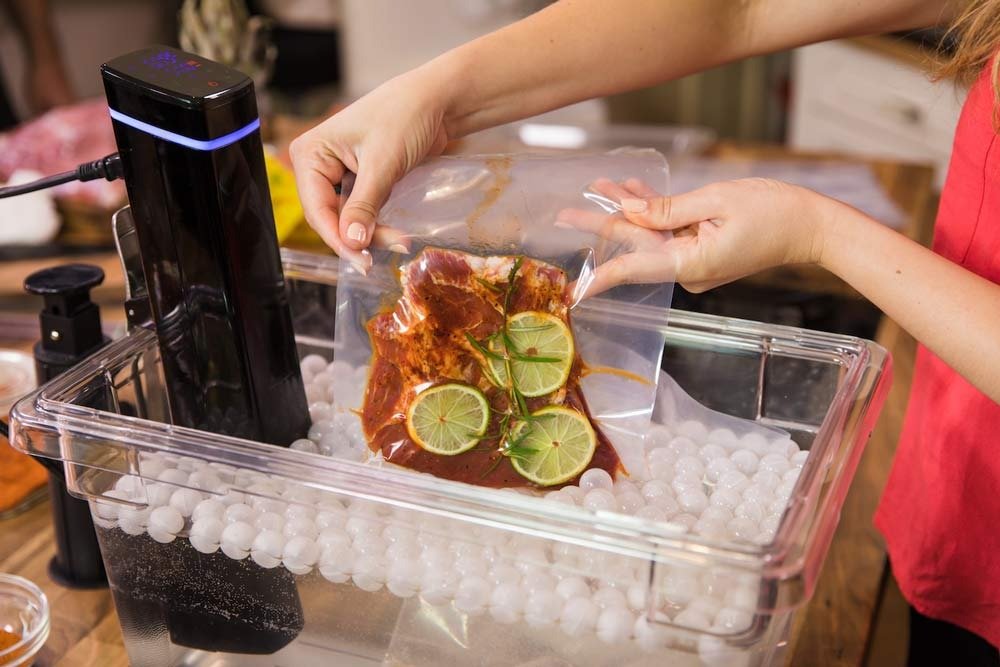
Why Sous Vide Fits Modern Foodservice Operations
Sous vide is about control. Control over doneness. Over food safety. Control over labor and consistency. Those factors matter far more than trends when a kitchen has to perform the same way every day, under pressure, with limited margin for error. Sous vide works because temperature control removes guesswork. Food is sealed, cooked at a precise temperature, and held safely until service. That single change reshapes prep flow, service timing, and quality control across the kitchen.
From a food safety standpoint, sous vide reduces exposure. Proteins are sealed before cooking, which lowers cross-contamination risk. Internal temperatures are consistent across every portion, and when validated time-and-temperature guidelines are followed, pasteurization occurs reliably. From an efficiency standpoint, prep becomes predictable. Cook once. Finish to order. Line stress drops. From a quality standpoint, moisture retention and texture consistency improve across the board.
Steak: Why It Remains the Benchmark for Sous Vide
Steak is one of the clearest examples of why sous vide works so well in foodservice environments. Cooking steak sous vide locks in doneness edge to edge. Medium-rare means medium-rare throughout, not just in the center. That consistency matters when dozens or hundreds of steaks move through a kitchen each night. Shrinkage is lower than grilling raw steaks. Portion cost becomes predictable. There is less handling. Internal temperatures are controlled precisely. After cooking, steaks can be rapidly chilled and held safely until service without sacrificing quality.
Chicken: Food Safety Without Dryness
Chicken is one of the most important sous vide foods in professional kitchens because it is also one of the easiest proteins to mishandle. Sous vide chicken reaches pasteurization temperatures without drying out, which is where traditional cooking methods often fail. High-heat cooking ensures safety but frequently destroys texture. Sous vide avoids that tradeoff. Chicken breasts, thighs, and whole portions cook evenly, batch after batch.
Reliable pathogen reduction when cooked correctly. Juicier texture even with lean cuts. Consistent results across prep teams. Reduced risk during handling and service. After sous vide, chicken can be grilled, roasted, or pan-finished quickly for color and flavor. When operators ask is sous vide healthier, chicken is part of the answer. Less overcooking means less nutrient loss and less reliance on heavy sauces to cover dryness.
Pork: Safer Cooking with Better Yield
Pork benefits from sous vide in ways many kitchens overlook. Lean cuts like pork loin dry out quickly with conventional cooking. Sous vide keeps pork tender while still meeting food safety requirements. In foodservice settings, pork cooked sous vide maintains moisture at safe internal temperatures, reduces anxiety around doneness, allows batch cooking with safe holding, and improves plate consistency. This is especially useful for banquets, catering, and high-volume service where timing matters more than theatrics.
Eggs: A Reliable Choice for Breakfast and Brunch
Eggs are a prime candidate for sous vide cooking, especially in commercial kitchens focused on breakfast and brunch. Sous vide egg bites, soft-cooked eggs, and custard-like dishes consistently produce a uniform texture.
Timing becomes flexible. Batch cooking reduces pressure during peak hours. Safer handling follows from controlled temperatures. Waste from overcooked eggs drops sharply. Portion control becomes easier.
Vegetables: Improved Texture, Reduced Waste
Cooking vegetables sous vide preserves their color and structure more effectively than boiling or steaming. Seasoning is absorbed more uniformly, and the texture remains deliberate, avoiding the mushiness or wateriness that can occur with other methods.
From a practical standpoint, sous vegetables minimize trim loss, ensure consistent plating, streamline batch preparation, and extend the time they can be safely held when properly chilled. Furthermore, they complement finishing techniques such as roasting or grilling, which impart surface flavor without compromising the interior.
Seafood: Precision Where Margins Are Thin
Seafood is expensive and unforgiving. Sous provides precision that protects both quality and margins. Fish reaches exact doneness without falling apart. Waste decreases because fewer portions are overcooked or mishandled. For operations serving seafood regularly, sous vide reduces risk across the board.
How Sous Vide Improves Food Safety in Real Kitchens
Food safety is about repeatability. Sous supports food safety by sealing food before cooking, maintaining precise temperatures, supporting pasteurization when guidelines are followed, and allowing safe chilling and storage for later service.
Most problems occur when kitchens skip rapid chilling, hold food beyond safe limits, or fail to follow validated temperature tables. When those steps are handled correctly, sous is one of the safest cooking methods used in foodservice today.
Is Sous Vide Healthier for Menu Development?
The question is sous vide healthier depends on execution, but the advantages are clear. Lower cooking temperatures preserve moisture and nutrients. Less added fat is required. Proteins remain tender without heavy sauces. Vegetables keep structure and color.
Guests may not know the technique, but they notice the difference in texture and consistency.
Sous Vide Solutions for New Menus
Many kitchens choose to work with an established sous company instead of building every process internally. Cuisine Solutions supports foodservice operators across multiple industries by providing sous vide solutions designed for scale, consistency, and safety.
The value is assurance. Food safety protocols are built into the process. Portions are consistent. Holding and finishing workflows are planned in advance. When kitchens work with a sous company that understands operational pressure, menu updates become easier to execute without compromising the goals outlined throughout this article.
Why Sous Vide Supports Menu Expansion
Menu expansion often fails because kitchens cannot support complexity. Sous vide simplifies complexity. Once core proteins and vegetables are cooked sous vide, finishing options multiply. One base protein can support multiple menu items. Execution becomes repeatable. Sous is not about showing off technique. It is about solving real operational problems. The best food to sous includes proteins and vegetables that benefit from precision, safety, and consistency. When kitchens cook sous, food safety improves, waste drops, and menu quality becomes repeatable instead of fragile. That is why sous vide foods continue moving into everyday foodservice operations.
Disclaimer
This article is intended for informational and educational purposes only. It does not constitute food safety, regulatory, nutritional, or operational advice. While sous vide cooking is widely used in professional foodservice environments, proper execution requires strict adherence to validated time-and-temperature guidelines, local health regulations, and approved food safety protocols. Results may vary depending on equipment, procedures, ingredients, and staff training. Operators should consult qualified food safety professionals, regulatory authorities, and equipment manufacturers before implementing or modifying sous processes in their kitchens. References to companies or solutions are for illustrative purposes and do not represent an endorsement or guarantee of outcomes.