A customer calls. They say the package never arrived. Your driver says it did. You have no photo, no signature, no timestamp. You refund the order and eat the loss.
This happens more than once a week for most delivery operations. Here is how to stop the bleeding.
What Most Delivery Tools Get Wrong
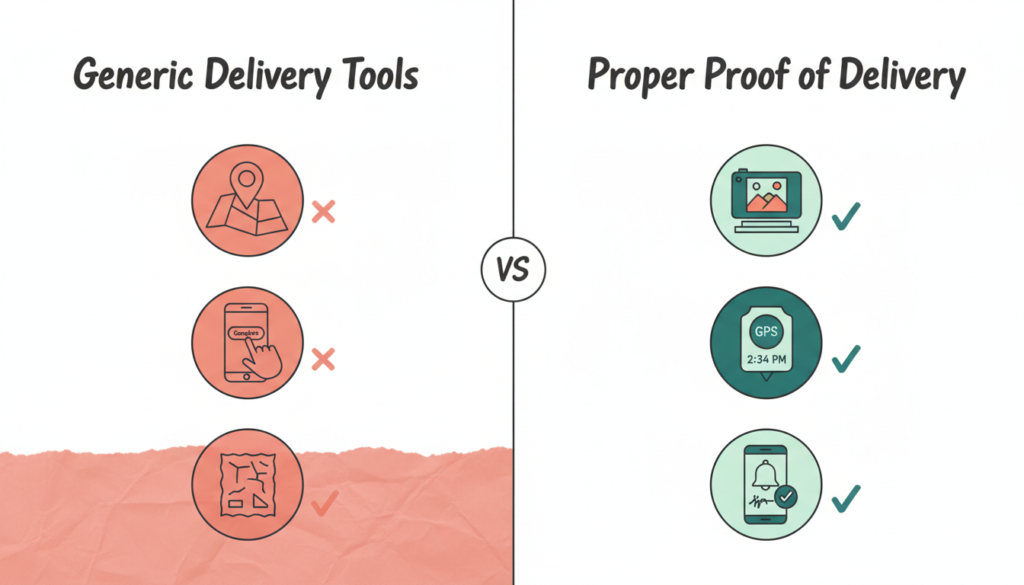
Generic delivery software tracks a package from warehouse to “delivered.” That last status update is where things fall apart. A pin on a map is not proof. A driver tapping “complete” on a screen is not evidence.
Most tools treat proof of delivery as an afterthought. They bolt on a signature field or a notes box. Neither holds up when a customer disputes a charge with their credit card company.
Paper-based systems are worse. Signed slips get lost in truck cabs. They fade. They never make it back to the office. By the time a dispute lands, the evidence is gone.
If your delivery confirmation lives on a piece of paper, it does not really exist.
What a Good Proof of Delivery Tool Actually Does
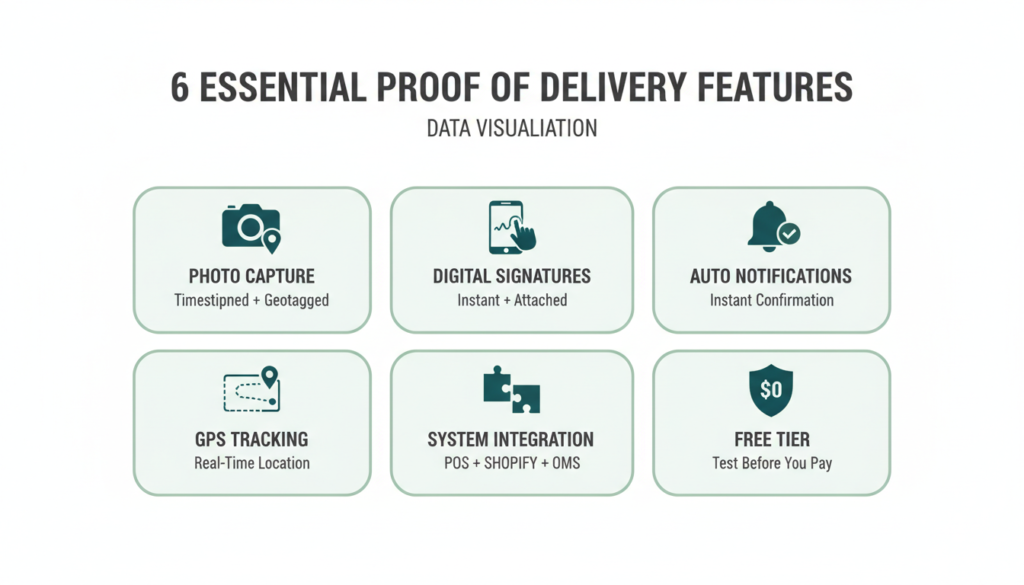
Timestamped, Geotagged Photo Capture
Your driver snaps a photo at the door. The tool records the exact time and GPS coordinates. No ambiguity. When a customer claims non-delivery, you send them a photo of their package on their porch with a timestamp that matches the delivery window.
Digital Signature Collection
Some deliveries demand a signature. A good tool captures it on the driver’s phone and attaches it to the order record instantly. No paper, scanning. No chasing drivers for crumpled receipts.
Automatic Customer Notifications
The moment a delivery completes, your customer gets a confirmation with the photo or signature attached. This kills disputes before they start. Customers who see their proof of delivery almost never file chargebacks.
Real-Time Driver Tracking
You need to know exactly when and where a delivery happened. Real-time GPS tracking gives you a full timeline. Pair this with a route planner and you also cut windshield time between stops.
Integration with Your Existing Order Systems
Proof of delivery data is useless if it sits in a silo. The tool should sync with your POS, Shopify store, or order management platform. Every delivery record should live next to the order it belongs to.
A Free Tier for Real-World Testing
You should never pay before you prove the tool works with your drivers, your routes, and your customers. A free tier lets you run actual orders through the system before committing budget.
Habits That Make Proof of Delivery Work
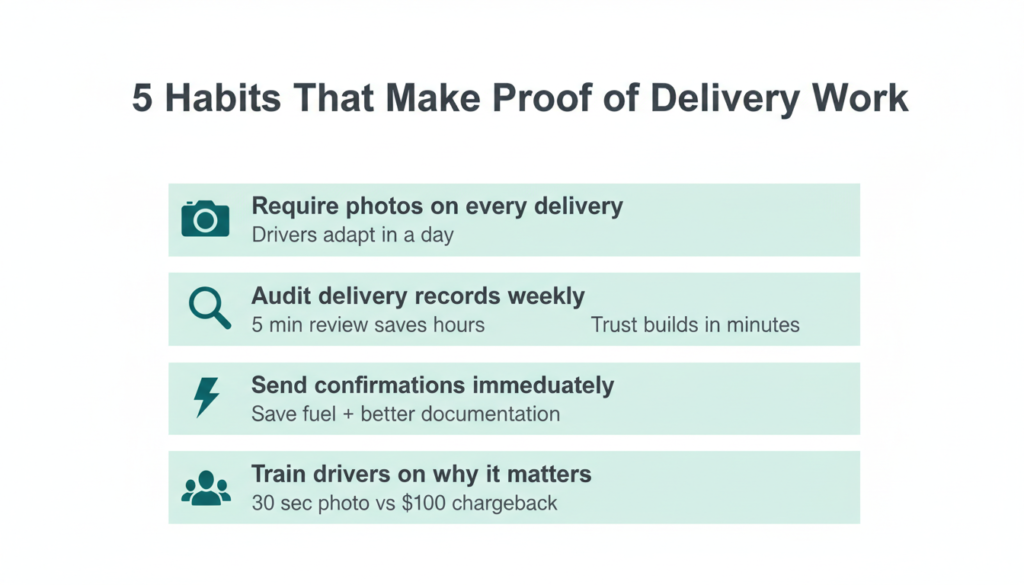
Require photos on every delivery, no exceptions. Make it a default, not an option. Drivers adapt in a day. Your dispute rate drops in a week.
Audit delivery records weekly. Spot missing photos or unsigned deliveries before they become disputes. Five minutes of review saves hours of back-and-forth.
Send confirmation messages immediately. Do not batch them. A customer who sees proof within minutes of delivery trusts the process. Delayed confirmations invite doubt.
Use GPS data to optimize routes, not just verify deliveries. A route planner that accounts for stop density and traffic patterns saves fuel and gives drivers more time at each stop for proper documentation.
Train drivers on why it matters. A 30-second photo adds zero meaningful time to a stop. A single chargeback costs 25−100 in fees alone, before you count the lost product.
Your Competitors Already Have This Figured Out
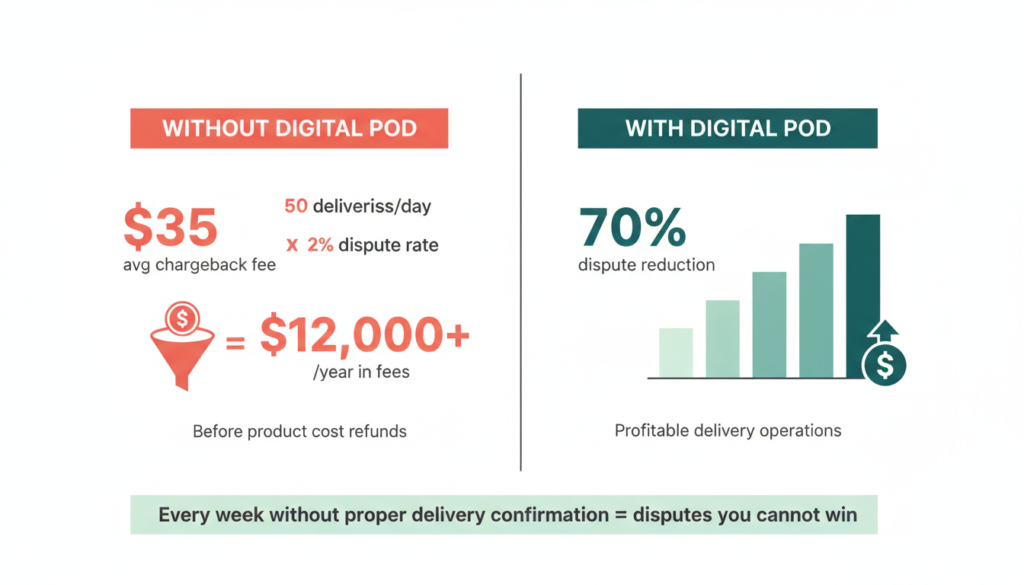
The average chargeback costs a business $35 in fees on top of the refunded order value. Operations running 50 deliveries a day with even a 2% chargeback rate can lose over $12,000 a year in fees alone. Add refunded product costs, and that number can easily double.
Meanwhile, teams using digital proof of delivery report dispute reductions of 70% or more. That is not a marginal improvement. That is the difference between profitable delivery and a slow leak that drains your margins.
Every week without proper delivery confirmation is another stack of disputes you cannot win. The tools exist. The cost of entry is zero. The cost of waiting is not.