
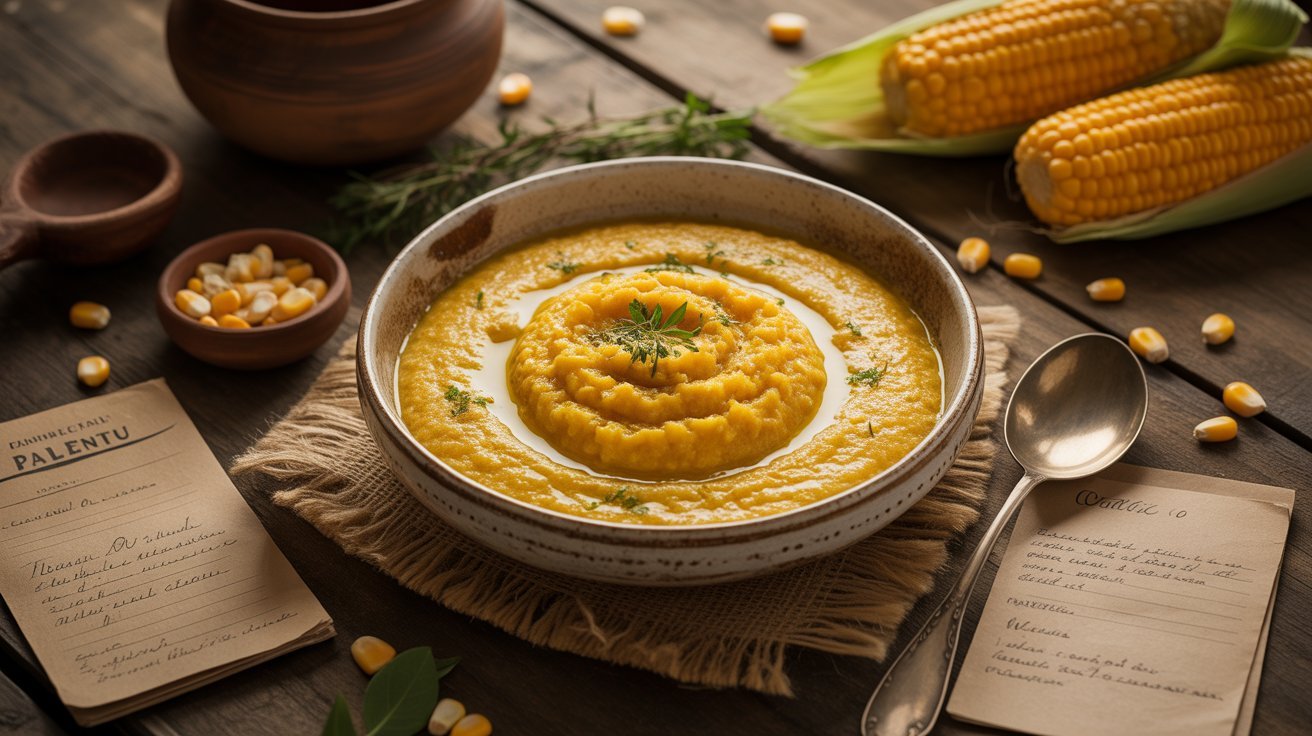
Palentu is far more than a simple cornmeal preparation. Rooted deeply in the culinary cultures of the Balkans and Eastern Europe, it represents a unique synthesis of tradition, nutrition, and adaptability. While often compared to Italian polenta, it carries its own identity, reflecting regional preparation methods, local ingredients, and cultural nuances. At its essence, it is cornmeal slowly cooked in water, milk, or broth until it reaches a creamy or firm consistency. Depending on hydration, cooking, and cooling techniques, it can be served as a smooth, spoonable porridge or sliced and grilled, offering a versatile base for countless meals.
Beyond its culinary appeal, it significance extends to nutrition and human biology. Historically, it was more than sustenance—it was a practical solution for energy needs, food preservation, and efficiency in rural life. Its simplicity and adaptability ensured survival during harsh winters, scarce resources, and physically demanding lifestyles. In modern times, it re-emerges as a functional food, bridging traditional wisdom with contemporary dietary principles, including blood sugar regulation, gut health, and metabolic efficiency.
This article examines palentu from every angle: historical origins, ingredients, preparation methods, nutritional profile, health benefits, cultural significance, and modern culinary applications.
Origins and Historical Significance
Long before maize reached Europe, the continent relied on grains such as millet, spelt, farro, and buckwheat to prepare porridges resembling it. These early porridges were energy-dense, adaptable, and easy to cook, sustaining communities through long winters and periods of scarcity.
European porridges were simple yet nutritionally sufficient. They provided slow-release energy, fiber, and essential micronutrients. These early staples illustrate an enduring principle: foods that align with human biology, survival needs, and practical cooking methods tend to persist, whereas novelty-based dishes often fade.
Introduction of Maize to Europe in the 16th Century
Maize, native to the Americas, was introduced to Europe through the Columbian Exchange in the 16th century. European farmers quickly embraced maize because of its high yield, resilience to poor soil, and long storage life. These characteristics made corn an ideal crop for regions with harsh climates and unpredictable harvests.
Corn’s introduction transformed traditional porridge practices. What began as millet or spelt-based porridge evolved into maize-based palentu, a dish that could reliably feed families through demanding agricultural cycles. It was affordable, filling, and adaptable, providing both caloric energy and the structural flexibility needed for rural households.
Palentu in Balkan and Eastern European Cultures
Countries such as Croatia, Serbia, Bosnia, and Hungary adopted it as a daily nutritional foundation. It was prepared in large pots, sometimes slightly fermented, and often paired with local dairy, vegetables, or meats. Its continued presence across centuries is not accidental. It endured because it aligned with human physiology, environmental demands, and cultural practicality.
The dish also became a symbol of community and resourcefulness. Families would gather around a simmering pot, sharing labor, stories, and meals, embedding it into the social fabric of rural life.
How Survival and Rural Life Shaped Palentu
Its design was dictated by necessity, not culinary innovation:
- Affordable and filling: One pot could feed an entire family for multiple meals.
- Adaptable: It could be creamy, firm, grilled, fried, or layered in casseroles.
- Sustainable: Minimal ingredients, low waste, and long storage potential.
The endurance of palentu illustrates a critical principle: foods that satisfy human physiology and practicality persist across generations. Its survival through centuries of hardship highlights its role as both sustenance and a cultural mainstay.
Ingredients and Traditional Preparation
Cornmeal: Types and Nutritional Differences
It is traditionally made with coarse or medium grind cornmeal, often stone-ground for superior nutrient retention. Cornmeal types vary in fiber, vitamin content, and mineral density, influencing both health and culinary outcomes.
| Cornmeal Type | Fiber (g per 100g) | B-Vitamins | Minerals |
| Whole-grain stone-ground | 7–9 | B1, B3 | Mg, P, Fe |
| Refined yellow cornmeal | 2–3 | Limited | Reduced |
Whole-grain stone-ground cornmeal retains essential fiber, B-vitamins, magnesium, and phosphorus, improving metabolic response, digestion, and overall nutrient intake. Refined variants, while convenient, lack many of these benefits.
Liquids for Cooking
The choice of liquid influences both flavor and texture:
- Water: Neutral, low-calorie, preserves the natural corn flavor.
- Milk: Adds creaminess and protein, enhancing satiety.
- Broth: Infuses umami and nutrients, ideal for savory palentu.
Optional Enhancers
Traditional often includes local ingredients to improve flavor, texture, and nutrition:
- Butter or olive oil: Healthy fats slow carbohydrate absorption and stabilize blood sugar.
- Cheese or dairy: Boosts protein content, adding satiety.
- Herbs and spices: Introduce flavor without excess calories.
Modern adaptations may also include vegetable purees, mushrooms, legumes, or other nutrient-dense additions.
Step-by-Step Traditional Cooking Method
- Bring the chosen liquid to a gentle boil.
- Gradually pour in cornmeal while stirring to prevent lumps.
- Simmer for 25–40 minutes, stirring frequently.
- Optionally, add butter, cheese, or herbs near the end.
- Serve creamy or cool for firm slicing.
Creamy vs. Firm Palentu
- Creamy (soft porridge): Higher liquid ratio, served hot with toppings.
- Firm (sliceable): Lower liquid, cooled, optionally grilled or baked.
Importance of Stirring, Cooking Time, and Cooling
- Continuous stirring prevents lumps and ensures uniform gelatinization of starch.
- Longer cooking enhances flavor and digestibility.
- Cooling triggers resistant starch formation, supporting gut health and insulin sensitivity.
Nutritional Composition of Palentu
Macronutrients
A 150g serving of plain, water-cooked pasta provides:
| Nutrient | Amount |
| Carbohydrates | 30–35 g |
| Protein | 2–3 g |
| Fat | <1 g |
| Calories | 150–170 |
This macronutrient profile ensures energy provision without rapid metabolic spikes, particularly when paired with protein or healthy fats.
Micronutrients
Palentu is a source of essential micronutrients:
- B-vitamins (B1, B3): Support energy metabolism and nervous system function.
- Magnesium: Crucial for muscle and nerve health.
- Phosphorus: Needed for ATP production and cellular energy.
Stone-ground, whole-grain cornmeal retains these nutrients better than refined variants.
Resistant Starch Formation
Cooking, cooling, and reheating palentu converts part of the starch into resistant starch, which:
- Improves insulin sensitivity
- Enhances gut microbiome diversity
- Reduces post-meal glucose spikes
This makes palentu metabolically similar to legumes rather than simple refined carbohydrates.
Whole-Grain vs Refined Cornmeal
| Feature | Whole-Grain | Refined |
| Fiber | High | Low |
| Resistant Starch Potential | High | Low |
| Vitamins & Minerals | Retained | Reduced |
| Glycemic Response | Moderate | Higher |
Recommendation: Use whole-grain, stone-ground cornmeal for optimal nutritional benefit.
Health Benefits
Gut Health and Microbiome Support
Resistant starch from cooled palentu feeds beneficial gut bacteria, improving digestion and short-chain fatty acid production, which supports colon health and immune function.
Blood Sugar Regulation and Insulin Sensitivity
Slow-cooked it with protein or fat slows carbohydrate absorption. Resistant starch further moderates postprandial glucose spikes, making it a favorable carbohydrate for metabolic health.
Weight Management
It provides satiety with minimal calories. Pairing it with vegetables, legumes, or lean protein enhances fullness and supports weight management goals.
Gluten-Free Benefits
Naturally gluten-free cornmeal makes palentu suitable for celiac disease or gluten-sensitive individuals. Certified, uncontaminated sources are recommended.
Modern Dietary Relevance
It aligns with modern dietary trends:
- Low-glycemic diets
- Gut-friendly meal plans
- Sustainable, whole-food-based eating
- Paleo-inspired or plant-forward diets, when paired appropriately
It serves as a functional carbohydrate with structural and nutritional versatility.
Culinary Uses and Modern Variations
Traditional Pairings
- Butter or olive oil
- Cheese: feta, hard cheeses, local variants
- Vegetables: spinach, cabbage, peppers
- Legumes: beans, lentils
Creative Contemporary Uses
- Palentu bowls: Base for seasonal vegetables, sauces, proteins.
- Grilled or pan-fried slices: Crispy edges, ideal for breakfast or dinner.
- Layered gratins/casseroles: Combines creamy and firm textures.
- Vegan/vegetarian adaptations: Mushroom ragù, plant-based cheese, tomato sauces.
Flavoring, Coloring, and Infusing
- Herbs: thyme, rosemary, dill
- Purees: pumpkin, spinach, beetroot
- Spices: paprika, black pepper
- Plant-based milks: for creaminess
Repurposing Leftovers
Cooled slices can be pan-fried, grilled, or baked, turning yesterday’s meal into a flavorful snack.
Cultural and Social Significance
Palentu’s endurance illustrates its alignment with human physiology and social structure:
- Fueled by physically demanding labor
- Adapted to local ecosystems
- Required minimal industrial processing
- Welcomed nutritional companions
Community and Symbolism
Families often gathered around simmering palentu, sharing labor and stories, making it a symbol of community, thrift, and survival.
From Peasant Food to Culinary Staple
Once considered a poor man’s dish, it now features in rustic fine dining and contemporary kitchens, reflecting heritage, sustainability, and cultural pride.
Storage, Reheating, and Serving Tips
- Fresh: Serve immediately for a creamy texture.
- Cooled: Firm and sliceable, store 3–5 days.
- Reheating creamy: Add liquid and stir gently.
- Firm slices: Brush with oil or butter, grill, pan-fry, or bake until golden.
Common Myths
- “Palentu is just empty carbs.” → False: high in fiber, micronutrients, and resistant starch.
- “It spikes blood sugar” → Only if poorly prepared or consumed alone.
- “It’s outdated peasant food.” → Adaptable, functional, nutrient-resilient.
Conclusion
It is not merely a cornmeal dish—it is a culinary, nutritional, and cultural artifact.
- Nutritionally: Provides energy, resistant starch, and essential micronutrients.
- Culinarily: Adaptable—creamy, grilled, layered, or infused with flavors.
- Culturally: Embodies survival, community, and sustainable eating.
Whether served as a comforting breakfast porridge, a grilled side, or a creative modern dish, palentu remains relevant, versatile, and metabolically meaningful. Its endurance across centuries underscores the principle that simplicity, structure, and intelligent pairing are hallmarks of a dish that continues to nourish both body and culture.